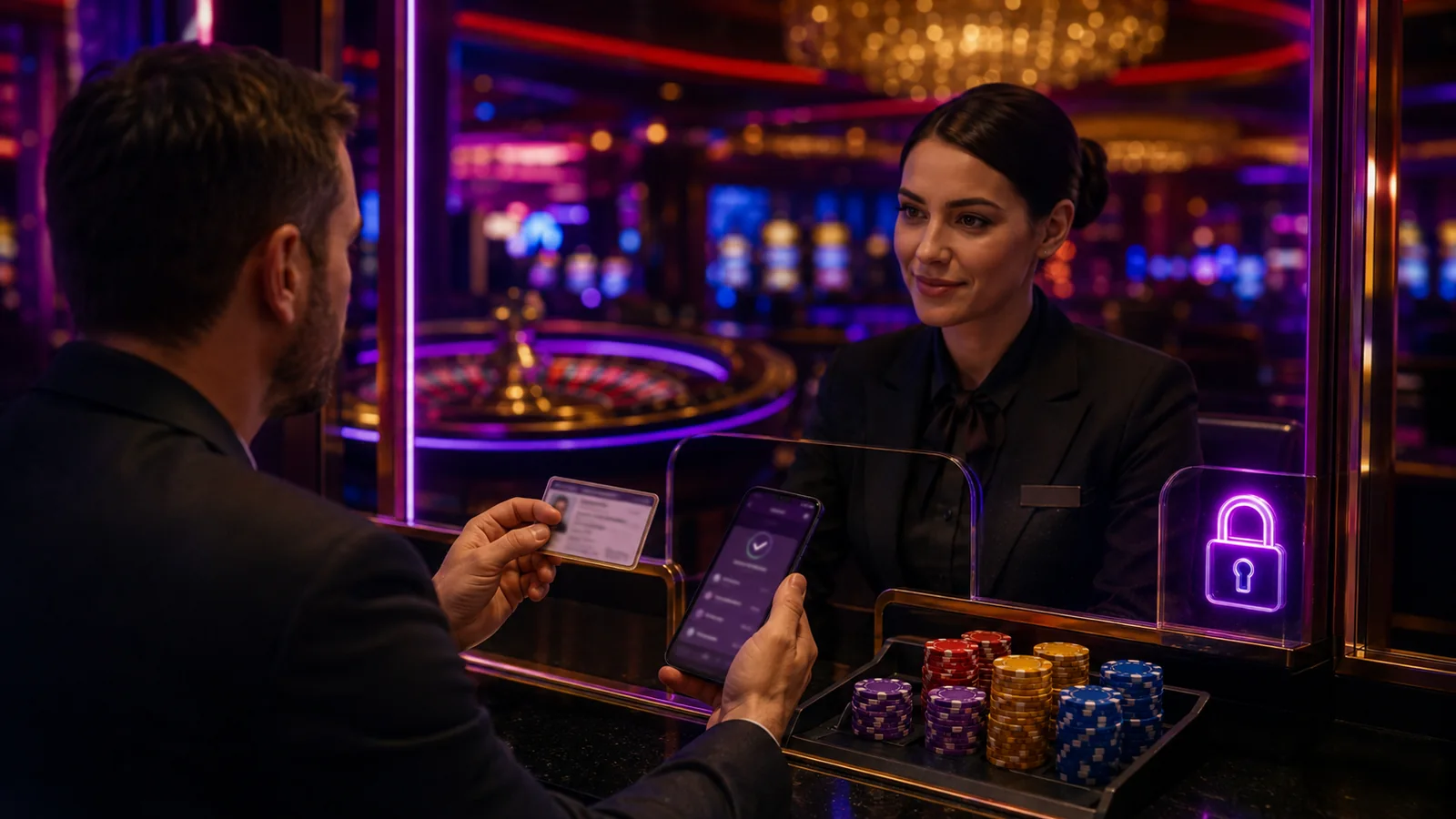
A new term appears in a partnership email
Imagine Maya, who follows poker and casino news casually, receives an email describing a company as an “iGaming platform.” The page mentions games, a wallet, a licence, and several suppliers, but it is unclear which company holds customer money or answers a complaint. She pauses before treating the label as proof of anything.
Maya draws a simple chain: regulator, licensed operator, platform provider, game studio, payment provider, identity vendor, affiliate publisher, and support service. The map lets her ask who owns the account, which entity appears in the official register, and which terms govern deposits and withdrawals.
Map the companies before judging the product
In common industry use, iGaming can cover online casino games, poker, betting, bingo, lottery-style products, software, payments, marketing, and supporting technology. One brand may rely on several suppliers, but the consumer still needs to identify the legal entity responsible for the account and the jurisdiction in which it is authorised.
That distinction matters because a polished game studio or payment badge does not by itself license the operator that accepts a customer. The useful question is not whether a feature sounds modern or generous. It is whether you can verify how it works, understand the money and data path, and decide before any promotional urgency changes the comparison.
Build the comparison around your real use case
Start with the situation in which you will actually use the service: opening one entertainment account from a personal device and making only a small, planned payment. Write down the device, time available, payment method, accessibility needs, and fixed entertainment budget before opening an operator page. Those constraints turn a broad product claim into a comparison you can repeat across several options.
Then verify these topic-specific points: the legal company name, licensed domain, permitted activity, applicable terms, customer-funds statement, complaint path, identity process, and limit tools. Save the relevant terms or help-page URL and note the date. A screenshot can document what you saw, but the operator's current terms and the applicable official register remain more important than a marketing summary or an old review.
Do not compare one provider’s headline with another provider’s detailed rules. Put the same fields in the same order, mark missing information as unknown, and stop when a material point cannot be confirmed. Unknown is a decision signal, not an invitation to assume the best.
- Match the brand and domain to an official register.
- Identify which company owns the player account.
- Separate the operator from game, platform, and payment suppliers.
- Find the withdrawal and complaint terms.
- Locate safer-play tools before registration.
Follow one account from sign-up to closure
The most revealing way to understand an iGaming business is to follow the account lifecycle rather than its home page. Friction is not automatically bad: identity checks, session confirmations, and cooling-off steps can protect accounts and support safer play. The problem is unexplained, inconsistent, or one-sided friction that is easy when depositing but obscure when withdrawing, closing an account, or using a limit.
Consider the complete path, not just the first screen. Ask what happens at registration, first payment, ordinary use, withdrawal, a disputed transaction, a forgotten password, and account closure. If support cannot explain that path in plain language before you pay, choose a lower-commitment option or walk away.
What a useful affiliate recommendation should disclose
An affiliate guide should identify the reader it is helping, state the evidence checked, and name the trade-off. For this decision, that means explaining which legal entity and domain were verified, which market the guide addresses, and which parts are supplied by third parties. A commission link must not turn an unknown into a positive claim or hide an inconvenient condition below the action button.
Treat unexplained scores, countdown pressure, copied bonus language, and superlatives without a method as weak evidence. Prefer a recommendation that tells you who should skip the option and gives direct links to current terms, licence information, privacy notices, or safer-gambling tools. Commercial availability is never a substitute for legal availability in your location.
Put safer play ahead of convenience
Whatever technology you choose, decide the time and money boundary before registration or deposit. A technology label does not change the risk of losing money or the need for limits. Gambling should remain discretionary entertainment; it is not a way to repair a budget, recover a previous loss, or produce dependable income.
If you start chasing losses, hiding activity, borrowing, cancelling essential spending, losing sleep, or increasing limits during a session, stop. Use a time-out, payment block, blocking software, or self-exclusion where available and contact a recognised support service in your country. Do not use a guide to work around an existing exclusion or account restriction.
Who does what in a typical iGaming journey
| Participant | Typical role | Question to verify |
|---|---|---|
| Regulator | Sets and enforces market rules | Is this operator authorised for my location? |
| Operator | Owns the customer relationship and account | Which legal name and domain appear in the register? |
| Game or platform supplier | Provides content or infrastructure | Does its presence actually cover the operator? |
| Affiliate publisher | Explains and refers potential customers | Is the commercial relationship disclosed? |
Your decision checklist
- Confirm gambling is legal for you and that you meet the local age rule.
- Find the licensed entity and exact domain.
- Read account, payment, privacy, and complaint terms.
- Identify each supplier badge without confusing it for an operator licence.
- Set a time and money limit before paying.
- Save authoritative links and the date checked.
Warning signs
- The site never identifies the account-owning company.
- A supplier logo is presented as if it were an operator licence.
- A review cannot say which jurisdiction it covers.
- Promotional language replaces withdrawal and complaint information.
Choose clarity over industry vocabulary
Use the industry map to narrow the decision to one responsible company, one licensed domain, and one set of current account terms. A service that cannot make those relationships clear is not improved by calling itself an iGaming platform.
Choose the option only when the current terms answer your material questions and the total commitment fits the limit you set in advance. If the evidence is incomplete, keep comparing through the iGaming Explained archive instead of depositing to discover the answer.
Browse every iGaming explainer →Frequently asked questions
Is iGaming the same as an online casino?
No. Online casino is one part of the broader iGaming ecosystem, which can also include poker, betting, software, payments, and supporting services.
Does a platform provider licence cover every operator?
Do not assume so. Verify the operator, domain, activity, and location in the relevant official register.
Why do affiliates appear in the map?
Affiliates explain and refer offers, so their commercial relationship and evidence standard affect how readers should judge a recommendation.
Sources
Sources were last checked on September 6, 2026. Rules and availability can change.
- UK Gambling Commission — What to look at before you gamble — checked 2026-09-06
- UK Gambling Commission — Opening accounts — checked 2026-09-06