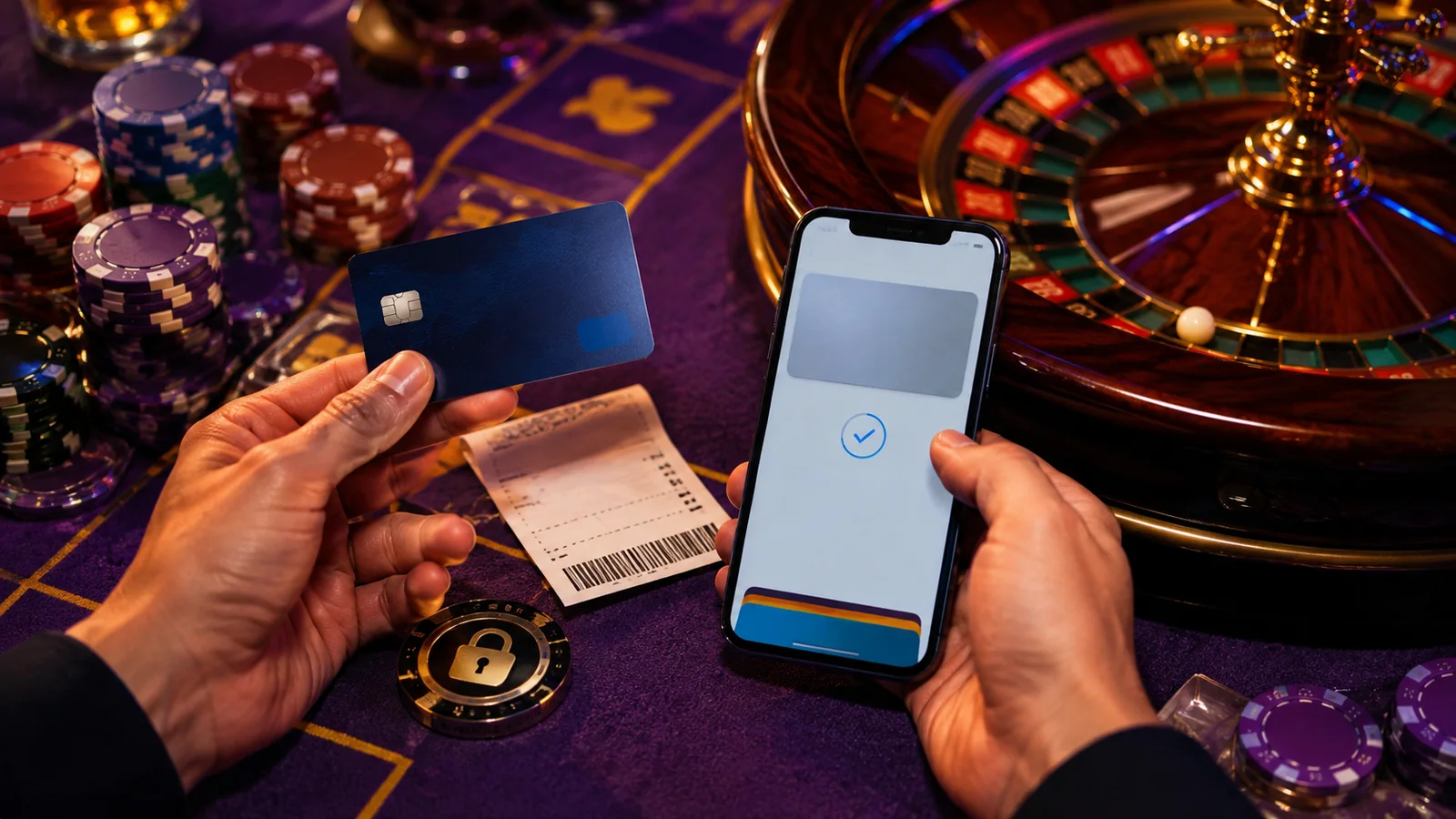
Choosing a route that also works on the way out
Imagine that Leah occasionally plays online casino games with a fixed monthly entertainment allowance. At checkout she can use a debit card, bank transfer, e-wallet, or mobile wallet. The fastest deposit button is highlighted, but Leah cares more about whether withdrawals can return through the same route and whether currency conversion will quietly add friction.
She makes a one-page comparison using her actual circumstances: a single verified account in her name, her home currency, the amount she has already budgeted, and her need for a clear statement trail. She rejects any method whose withdrawal path or fees she cannot confirm. The choice becomes an account-management decision rather than an impulse at the cashier.
Compare the complete money path
A payment method is not just a deposit button. Map the route from your own account to the casino and back again. Check whether withdrawals return to the original method, whether an alternative is required, which account gets priority after multiple deposits, and whether the operator or provider applies minimums, maximums, or frequency limits.
Use accounts held in your own verified name. A borrowed card, shared wallet, or third-party bank account can create identity and payment-ownership problems. If a method is available only for deposits, decide whether the stated withdrawal alternative is acceptable before funding. Keep the operator's answer and cashier terms with your records.
Cards: familiar, but not universal
A debit or other permitted payment card may be familiar and provide a recognizable statement entry. Availability depends on location, card type, issuer policy, and gambling regulation. Confirm whether the card is accepted for both deposits and withdrawals and whether your issuer blocks or categorizes gambling transactions in a particular way.
Never use borrowed money or credit to gamble. Some jurisdictions restrict credit-card gambling, and even where a method is technically accepted, interest, fees, or delayed awareness can undermine a fixed entertainment plan. Bank-level gambling blocks can be a useful extra layer when you want to stop or prevent unplanned payments.
Bank transfers: clear ownership, potentially more steps
A bank transfer can create a direct record between accounts and may suit a reader who values traceability. Check the reference information, expected stages, supported currencies, receiving details, and whether withdrawals use the same rail. Do not send money using banking details copied from an unofficial message or forum.
The practical trade-off can be time and manual effort. Confirm whether the operator credits funds only after settlement and whether your bank charges for domestic or international transfers. A transfer's apparent simplicity can disappear if conversion or intermediary fees apply, so compare the net amount and process rather than a single speed label.
E-wallets and mobile wallets: convenient separation with conditions
An e-wallet can separate an entertainment balance from everyday banking and may provide quick account notifications. That separation is useful only if you fund it from money already budgeted and do not top it up impulsively. Check account-verification status, currencies, provider fees, regional availability, and whether the casino excludes that method from a promotion.
A mobile wallet can reduce repeated card entry, but it does not remove the underlying funding method or operator verification. Protect the phone with a lock and multi-factor security, hide sensitive notifications, and avoid saving payment access on a shared device. Convenience should reduce administrative friction, not reduce the pause before a payment.
Measure fees, conversion, and privacy
Review operator fees, provider fees, exchange-rate treatment, and any charge for small or repeated withdrawals. If the casino account uses a different currency from your payment account, both deposit and withdrawal can involve conversion. Avoid inventing a single expected cost: calculate only from the current published terms for your method and location.
Payment privacy is also about data handling, not hiding gambling from yourself. Read which company processes the payment, what appears on statements, and which details the operator retains. Do not choose a route because an affiliate page calls it anonymous. Licensed account checks may still require identity and ownership information, and misleading privacy claims are a reason to leave.
Use payments to reinforce a safer plan
Set the operator deposit limit before the first payment and consider a separate bank or wallet alert. The limit should be below the amount that would affect essential bills, debt repayments, savings, or other people in your household. It is a ceiling, and there is no need to reach it.
Affiliate promotions often lead with deposit convenience or method-specific offers. Check whether choosing a promotion changes game eligibility, withdrawal handling, or the payment route. If a method encourages instant repeat deposits after losses, choose a slower, more visible process or do not play. Gambling should never be used to solve a financial shortfall.
Everyday payment-method trade-offs
| Method | Potential fit | Questions before using it |
|---|---|---|
| Payment card | Familiar statements and simple funding | Is it permitted, withdrawable, fee-free, and in your name? |
| Bank transfer | Direct ownership trail and fewer intermediaries | What are the settlement, reference, currency, and fee rules? |
| E-wallet | Separate entertainment balance and notifications | Is it verified, promotion-eligible, and accepted for withdrawal? |
| Mobile wallet | Convenient device-based authorization | What funds it, what data is shared, and how is the device secured? |
Your decision checklist
- Verify the casino and payment method are permitted where you are located.
- Use only a payment account held in your own verified name.
- Confirm the withdrawal route before making a deposit.
- Check deposit and withdrawal minimums, maximums, and frequency limits.
- Review operator, provider, and currency-conversion fees.
- Understand how the transaction appears and which company processes it.
- Set operator and banking alerts or limits before funding.
- Decline method-specific bonuses that make the route less clear.
Warning signs
- Instructions to use someone else's card, bank account, or identity
- A deposit-only method with no clearly explained withdrawal alternative
- Claims of anonymous gambling that ignore account verification
- Unclear conversion rates, fees, or payment-processing company
- One-click repeat deposits with hard-to-find limit controls
The practical recommendation
Choose one verified payment route that supports both deposit and withdrawal, keeps fees and currency treatment understandable, and gives you a useful record. Set limits and alerts before connecting it. The best method is not the fastest button; it is the route that makes your entertainment budget visible and easy to stop.
Compare more casino banking checks →Frequently asked questions
Should I use the fastest casino deposit method?
Speed is secondary. First confirm ownership rules, withdrawals, fees, currencies, verification, and whether the method supports your spending controls.
Can I deposit with another person's card?
Do not. Use a payment account in your own verified name. Third-party funding can create account, security, and compliance problems.
Does an e-wallet make casino payments anonymous?
Do not assume so. Licensed operators and payment providers may still verify identity, ownership, and transactions. Read the current privacy and account terms.
Sources
Sources were last checked on September 5, 2026. Rules and availability can change.
- UK Gambling Commission — Money and rights — checked 2026-09-05
- UK Gambling Commission — Age, ID and financial verification — checked 2026-09-05
- UK Gambling Commission — Information companies must give you about your account — checked 2026-09-05